Dangerous food additives to avoid E Code
Because my health and health of my family matters, throughout years I’ve looked into several publications and research that have been done regarding food additives, preservatives, artificial sweeteners and colors, and put together table that can be a simple guide to those who prefer to be cautious and who like to have a choice, to decide what to consume. Some of use might be more sensitive to chemicals then others.
Here is a new printable list with identifying code numbers of the nasty food additives that we should avoid eating. Artificial food preservatives, food colors and flavour enhancers, many of these can be dangerous chemicals added to our food and are known to be linked to Hyperactivity, Attention-Deficit Disorder (ADD), Asthma, Cancer and other medical conditions.
Where to look for food additives on a product label?
When buying groceries, these additives are listed (if it’s given by the law) on the food product’s packaging under “INGREDIENTS:” or “CONTAINS:” section, usually next to “Nutrition Information” but the code numbers or names of these additives can be printed on in a small font.
In my opinion placement of the text can be somewhat hidden or even misleading. Any dangerous additives added in the food, if the product contains any, really should be listed visibly and labeled on the pack for instance as “Nasty Additives“.
330 and E330 Citric Acid
How about the Citric Acid E330 or 330? No problem with naturally occurring citric acid. Artificially produced E330 or 330 additive, depending on where or how it is produced with using sulfuric acid, many believe the product might still contain mold and sulfur/sulfites not filtered out completely during the production (Sulfur dioxide and other sulfites (also referred to as sulphites) are among food additives in the list below, under H – A, causing asthmatic and allergic reactions.) For most people sulfites are safe, but for example sensitive aspirin allergies or asthma sufferers can react very severely to sulfites.
In the year 1953 Sir Hans Krebs received Nobel Prize for physiology medicine for discovering that theCitric acid in metabolic reactions acts as part in series of compounds occurring within physiological oxidation of proteins, carbohydrates and fats and turning them into water and Carbon dioxide. Called Tricarboxylic Acid Cycle or known as the Krebs Cycle which is involved in most metabolic reactions, where the Citric acid plays a major role.
* The world “krebs” translates to English word “cancer” … and that’s what created the misunderstanding that citric acid 330 – e330 causes cancer. But in fact it does not. However, it could melt your teeth if you kept it in your mouth for long or if you consumed soft drinks a lot. It is organic acid used as additive in foods, in soft drinks, in beer, wine or cheese production, citric acid prevents bacteria growth, it gives the citric/sour flavour, bakers use it, citric acid E330 or 330 is often added to cakes, biscuits, soups, all sorts of sauces, frozen packed and canned food products, sweets, marmalade’s, ice creams … you can find it mentioned on the packaging.
* The world “krebs” translates to English word “cancer” … and that’s what created the misunderstanding that citric acid 330 – e330 causes cancer. But in fact it does not. However, it could melt your teeth if you kept it in your mouth for long or if you consumed soft drinks a lot. It is organic acid used as additive in foods, in soft drinks, in beer, wine or cheese production, citric acid prevents bacteria growth, it gives the citric/sour flavour, bakers use it, citric acid E330 or 330 is often added to cakes, biscuits, soups, all sorts of sauces, frozen packed and canned food products, sweets, marmalade’s, ice creams … you can find it mentioned on the packaging.
Codes and names of dangerous food additives
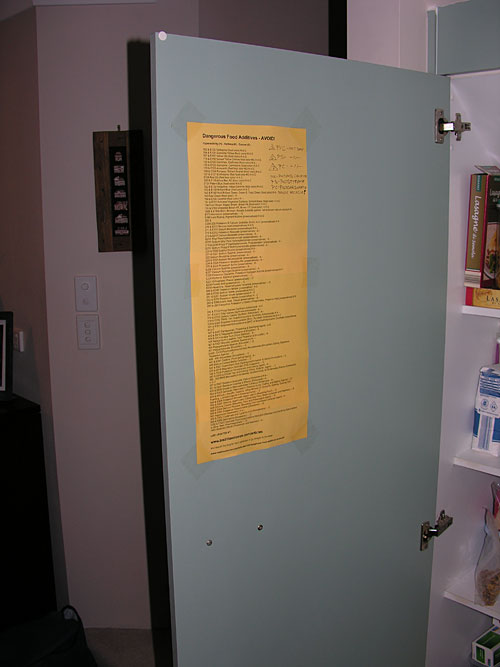
We use your list of dangerous food additives daily!
Printable list of food additives to stick on the back of your pantry door. (new window opens)
| Dangerous Food Additives table | |||||
| Additive Number | Name of Food Additive | Hyper- activity | Asthma | Cancer | |
| 102 & E102 | Tartrazine (food color) | H | A | C | |
| 104 & E104 | Quinoline Yellow (food color) | H | A | C | |
| 107 & E107 | Yellow 2G (food color) | H | A | C | |
| 110 & E110 | Sunset Yellow (Yellow food color #6) | H | A | C | |
| 120 & E120 | Carmines, Cochineal (food color) | H | A | - | |
| 122 & E122 | Azorubine, Carmoisine (food color) | H | A | C | |
| 123 & E123 | Amaranth (Red food color #2) | H | A | C | |
| 124 & E124 | Ponceau, Brilliant Scarlet (food color) | H | A | C | |
| 127 & E127 | Erythrosine (Red food color #2) | H | A | C | |
| E128 | Red 2G (Red food color) | H | A | C | |
| 129 & E129 | Allura Red AC (food color) | H | A | C | |
| E131 | Patent Blue (food color) | H | A | C | |
| 132 & E132 | Indigotine, Indigo Carmine (food color) | H | A | C | |
| 133 & E133 | Brilliant Blue (food color) | H | A | C | |
| 142 & E142 | Acid Brilliant Green, Green S, Food Green (food color) | H | A | - | |
| 143 | Fast Green (food color) | - | A | - | |
| 150 & E150 | Caramel (food color) | H | - | - | |
| 151 & E151 | Activated Vegetable Carbons, Brilliant Black (food color) | H | A | C | |
| 154 | Food Brown, Kipper Brown, Brown FK (food color) | H | A | C | |
| 155 & E155 | Chocolate Brown HT, Brown HT (food color) | H | A | C | |
| 160b & E160b | Bixin, Norbixin, Annatto Extracts (yellow, red to brown natural colors) | H | A | - | |
| E171 | Titanium Dioxide, TiO2 (to give foods an opaque color) more on Titanium Dioxide in comments below ↴ | ? | ? | ? | |
| E173 | Aluminium (preservatives) | - | - | C | |
| E180 | Latol Rubine, Pigment Rubine (preservatives) | H | A | C | |
| 200 & E200-203 | Potassium & Calcium Sorbates ,Sorbic Acid (preservatives) | H | A | - | |
| 210 & E210 | Benzoic Acid (preservatives) | H | A | - | |
| 211 & E211 | Sodium Benzoate (preservatives) | H | A | C | |
| 212 & E212 | Potassium Benzoate (preservatives) | - | A | - | |
| 213 & E213 | Calcium Benzoate (preservatives) | - | A | - | |
| E214 | Ethyl Para Hydroxybenzonate (preservatives) | - | A | - | |
| E215 | Sodium Ethyl Para Hydroxybenzonate (preservatives) | - | A | - | |
| 216 & E216 | Propyl P Hydroxybenzonate, Propylparaben (preservatives) | - | A | - | |
| E217 | Sodium Propyl P Hydroxybenzonate (preservatives) | - | A | - | |
| 220 & E220 | Sulphur Dioxide also Sulfur dioxide (preservatives) | H | A | - | |
| 221 & E221 | Sodium Sulfite or Sodium Sulphite (preservatives) | - | A | - | |
| 222 | Sodium Bisulfite or Sodium Bisulphite (preservatives) | - | A | - | |
| 223 & E223 | Sodium Metabisulfite or Sodium Metabisulphite (preservatives) | - | A | - | |
| 224 & E224 | Potassium Metabisulphite or Potassium Metabisulfite (preservatives) | - | A | - | |
| 225 & E225 | Potassium Sulfite or Potassium Sulphite (preservatives) | - | A | - | |
| E226 | Calcium Sulfite or Calcium Sulphite (preservatives) | - | A | - | |
| E227 | Calcium Hydrogen Sulphite or Calcium Hydrogen Sulfite (preservatives) | - | A | - | |
| E228 | Potassium Bisulfite, Potassium Hydrogen Sulfite or Potassium Bisulphite, Potassium Hydrogen Sulphite (preservatives) | H | A | - | |
| E230 | Diphenyl, Biphenyl (preservatives) | - | - | C | |
| E231 | Orthophenyl Phenol (preservatives) | - | - | C | |
| E236 | Formic Acid (preservative) | - | - | C | |
| E239 | Hexamine, Hexamethylene Tetramine (preservatives) | - | - | C | |
| 249 & E249 | Potassium Nitrate (preservative) | - | A | C | |
| 250 & E250 | Sodium Nitrite (preservative) | H | A | C | |
| 251 & E251 | Sodium Nitrate (preservative) | H | - | C | |
| 252 & E252 | Potassium Nitrate (preservative) | H | - | C | |
| 260 & E260 | Acetic Acid, Glacial (preservatives) | - | A | - | |
| 280 to 283 | Calcium or Potassium or Sodium Propionates, Propionic Acid (preservatives) | H | A | - | |
| 310 & E310 | Propyl Gallate (Synthetic Antioxidant) | - | A | C | |
| 311 & E311 | Octyl Gallate (Synthetic Antioxidant) | - | A | - | |
| 312 & E312 | Dodecyl Gallate (Synthetic Antioxidant) | - | A | - | |
| 319 & E319 | TBHQ, Tert Butylhydroquinone (Synthetic Antioxidants) | H | A | - | |
| 320 & E320 | Butylated Hydroxyanisole (BHA) (Synthetic Antioxidants) | H | A | C | |
| 321 & E321 | Butylated Hydroxytoluene (BHT) or Butylhydroxytoluene (Synthetic Antioxidants) | H | A | C | |
| 330 & E330 | Citric Acid (NOT DANGEROUS if naturally occurring e330 & 330 citric acid additive – but other can contain sulfites and mold, explained earlier in the article above this table and the printable version link.) | - | - | - | |
| 407 & E407 | Carrageenan (Thickening & Stabilizing Agent) | - | A | C | |
| 413 & E413 | Tragacanth (thickener & Emulsifier) | - | A | - | |
| 414 & E414 | Acacia Gum (Food Stabilizer) | - | A | - | |
| 416 | Karaya Gum (Laxative, Food Thickener & Emulsifier) | - | A | - | |
| 421 & E421 | Mannitol (Artificial Sweetener) | H | - | - | |
| 430 | Polyxyethylene Stearate (Emulsifier) | - | - | C | |
| 431 | Polyxyl Stearate (Emulsifier) | - | - | C | |
| E432 – E435 | Polyoxyethylene Sorbitan Monostearate (Emulsifiers Gelling Stabilisers Thickeners Agents) | - | - | C | |
| 433 – 436 | Polysorbate (Emulsifiers) | - | - | C | |
| 441 & E441 | Gelatine (Food Gelling Agent) | - | A | - | |
| 466 | Sodium CarboxyMethyl Cellulose | - | - | C | |
| 507 & E507 | Hydrochloric Acid (Hydrolyzing Enhancer & Gelatin Production) | - | - | C | |
| 518 & E518 | Magnesium Sulphate (Tofu Coagulant) | - | - | C | |
| 536 & E536 | Potassium Ferrocyanide (Anti Caking Agent) | - | A | - | |
| 553 & E553 & E553b | Talc (Anti Caking, Filling, Softener, Agent) | - | - | C | |
| 620 – 625 | MSG Monosodium Glutamate, Glutamic Acid, all Glutamates (Flavour Enhancers) | H | A | C | |
| 627 & E627 | Disodium Guanylate (Flavour Enhancers) | H | A | - | |
| 631 & E631 | Disodium Inosinate 5 (Flavour Enhancers) | - | A | - | |
| 635 & E635 | Disodium Ribonucleotides 5 (Flavour Enhancers) | - | A | - | |
| 903 & E903 | Camauba Wax (used in Chewing Gums, Coating and Glazing Agents) | - | - | C | |
| 905 & 905 a,b,c | Paraffin and Vaseline, White Mineral Oil (Solvents, Coating and Glazing, Anti Foaming Agents, Lubricant in Chewing Gums) | - | - | C | |
| 924 & E924 | Potassium Bromate (Agent used in Bleaching Flour) | - | - | C | |
| 925 & E925 | Chlorine (Agent used in Bleaching Flour, Bread Enhancer and Stabiliser) | - | - | C | |
| 926 | Chlorine Dioxide (Bleaching Flour and Preservative Agent) | - | - | C | |
| 928 & E928 | Benzoyl Peroxide (Bleaching Flour and Bread enhancer Agent) | - | A | - | |
| 950 & E950 | Potassium Acesulphame (Sweetener) | - | - | C | |
| 951 | Aspartame (Sweetener) | H | A | - | |
| 952 & E952 | Cyclamate and Cyclamic Acid (Sweeteners) | - | - | C | |
| 954 & E954 | Saccharine (Sweetener) | - | - | C | |
| 1202 & E1202 | Insoluble Polyvinylpyrrolidone Insoluble (Stabiliser and Clarifying Agent added to Wine, Beer, Pharmaceuticals) | - | - | C | |
| 1403 | Bleached Starch (Thickener and Stabiliser) | - | A | - | |
Food additives to avoid …
… linked to hyperactivity, asthma, cancer – avoid these in your own will in your every day diet!
If allergic and other reactions to food additives can occur hours and even days later after they are consumed therefore it can be hard for many people to notice these connection links.
If allergic and other reactions to food additives can occur hours and even days later after they are consumed therefore it can be hard for many people to notice these connection links.
Comments
Post a Comment